Revamping IntuParcel for Enterprise Logistics Teams
Redesigned a courier intelligence system to reduce operational friction, improve data clarity, and enable faster decision-making for logistics ops managers.
My role
Product designer
Contribution
Research, Strategy, and Design
Duration
8 weeks
Problem space
Imagine you are a logistics operations manager.
Your day depends on spotting issues early, reconciling shipment data fast, and making decisions under constant time pressure.
But inside IntuParcel, critical information is scattered across screens, workflows feel fragmented, and the system gives you little confidence in the data you’re acting on. Tasks that should take minutes stretch longer, errors slip through, and the tool designed to help you becomes a daily bottleneck.
What Is IntuParcel?
IntuParcel is a B2B logistics intelligence platform used by operations teams to track shipments, manage courier performance, and resolve delivery issues at scale.
For teams handling hundreds of shipments daily, speed, clarity, and data trust are non-negotiable.
Research signals
~60–70% of daily tasks required users to move between 3–4 screens to complete a single action, increasing task time and error risk during peak operational hours.
Over half the users interviewed said they often relied on memory, external notes, or manual checks to keep track of high-priority shipments.
Several users mentioned feeling mentally overloaded when handling multiple shipments simultaneously,
Users consistently described using IntuParcel while multitasking, handling escalations, or under strict SLAs.
Updated design
Old design
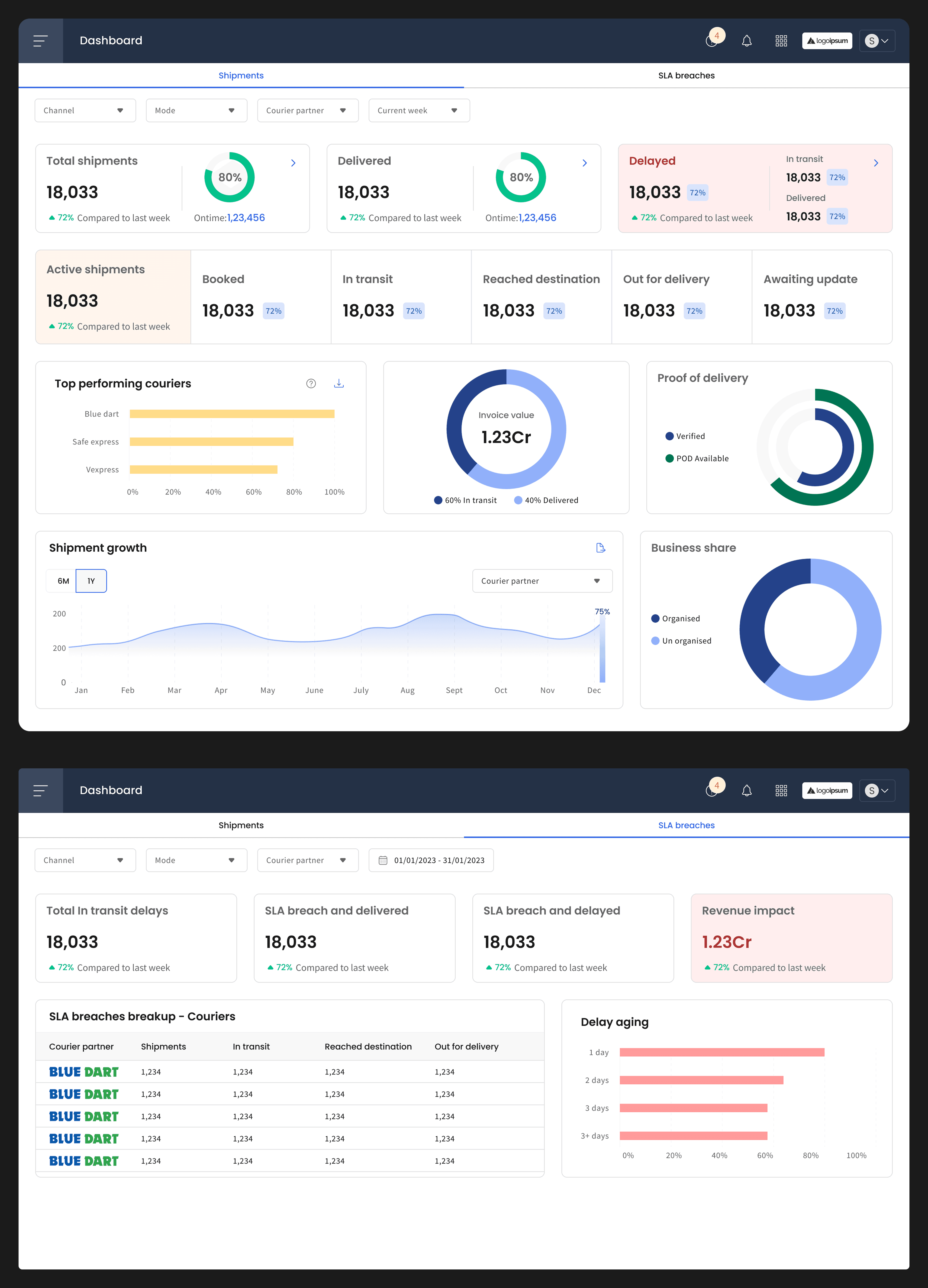
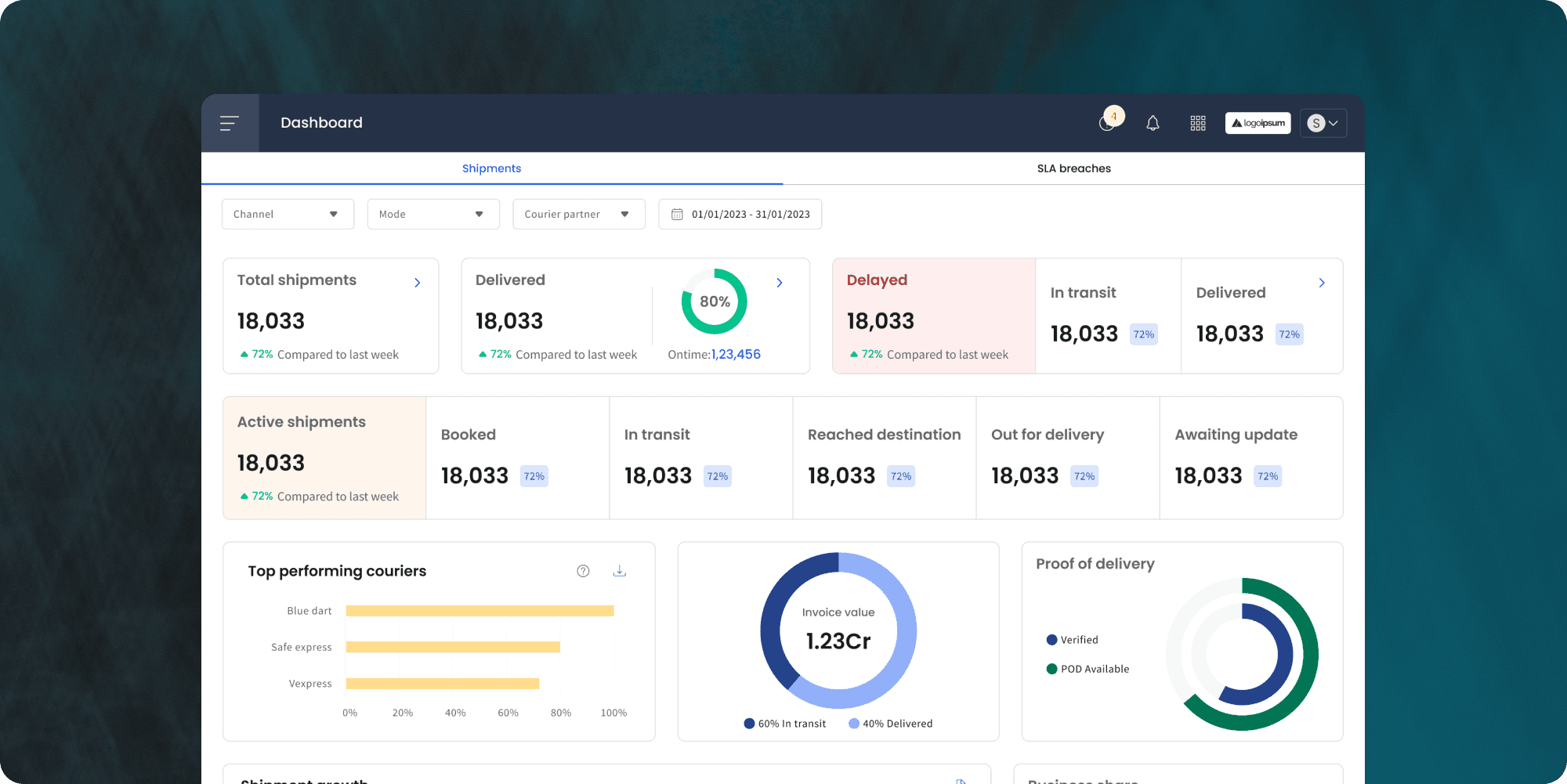
Instead of redesigning the dashboard for visual polish, I restructured it around exception visibility and prioritization.
The primary shift was from a data-heavy overview to an action-oriented interface that surfaces risk before completeness.
Exception-first summary
Introduced an exception-first summary section highlighting delayed, failed, or high-risk shipments
Visual hierarchy
Establishing clear visual hierarchy through status color differentiation and weight
Better grouping
Grouping shipments by operational relevance rather than raw data categories
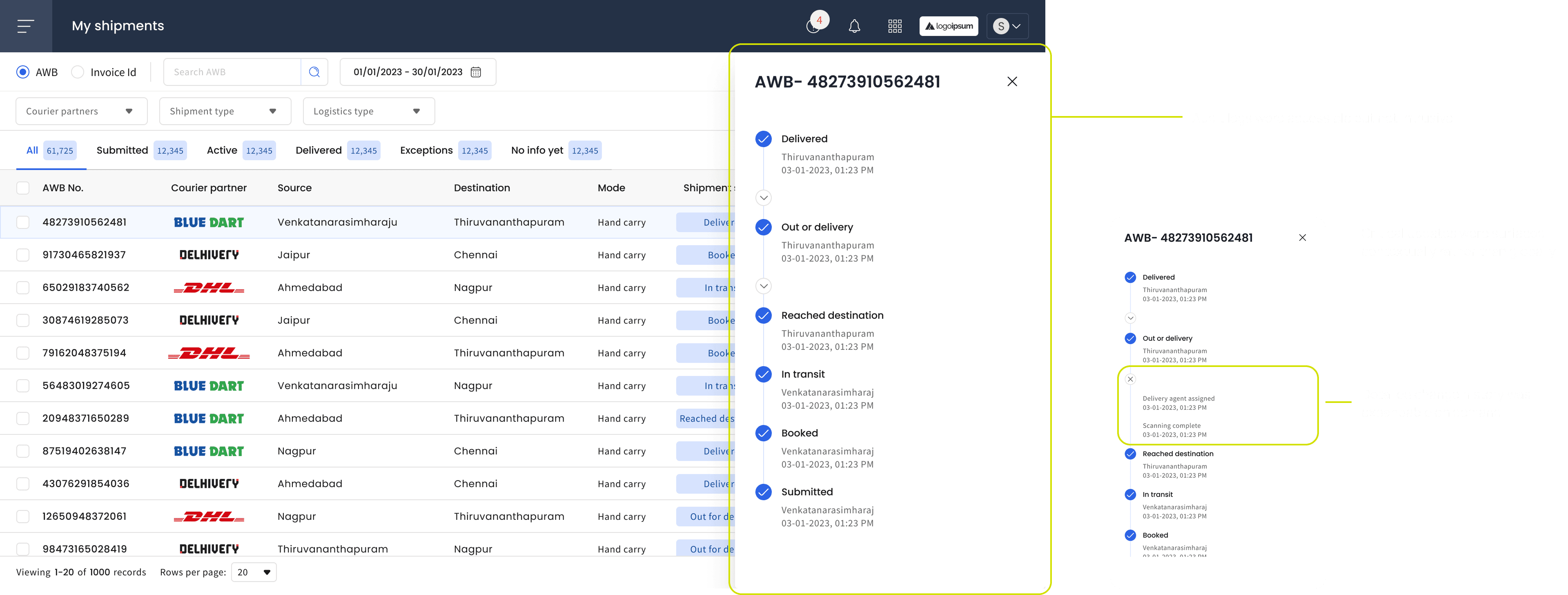
User interviews revealed a recurring behavior: before taking action on shipment updates, several users verified the information externally.
They were unsure:
When a shipment status changed
Who initiated the change
Whether the update was system-generated or manual
This hesitation slowed decision-making and undermined confidence in a tool meant to streamline operations.
Reduced manual reconciliation effort
Users spent less time piecing together data and more time resolving actual issues.
Faster identification of discrepancies
Mismatches in freight data became immediately visible instead of requiring manual comparison
Reduced dependency
Users no longer needed to rely heavily on spreadsheets or parallel systems for auditing
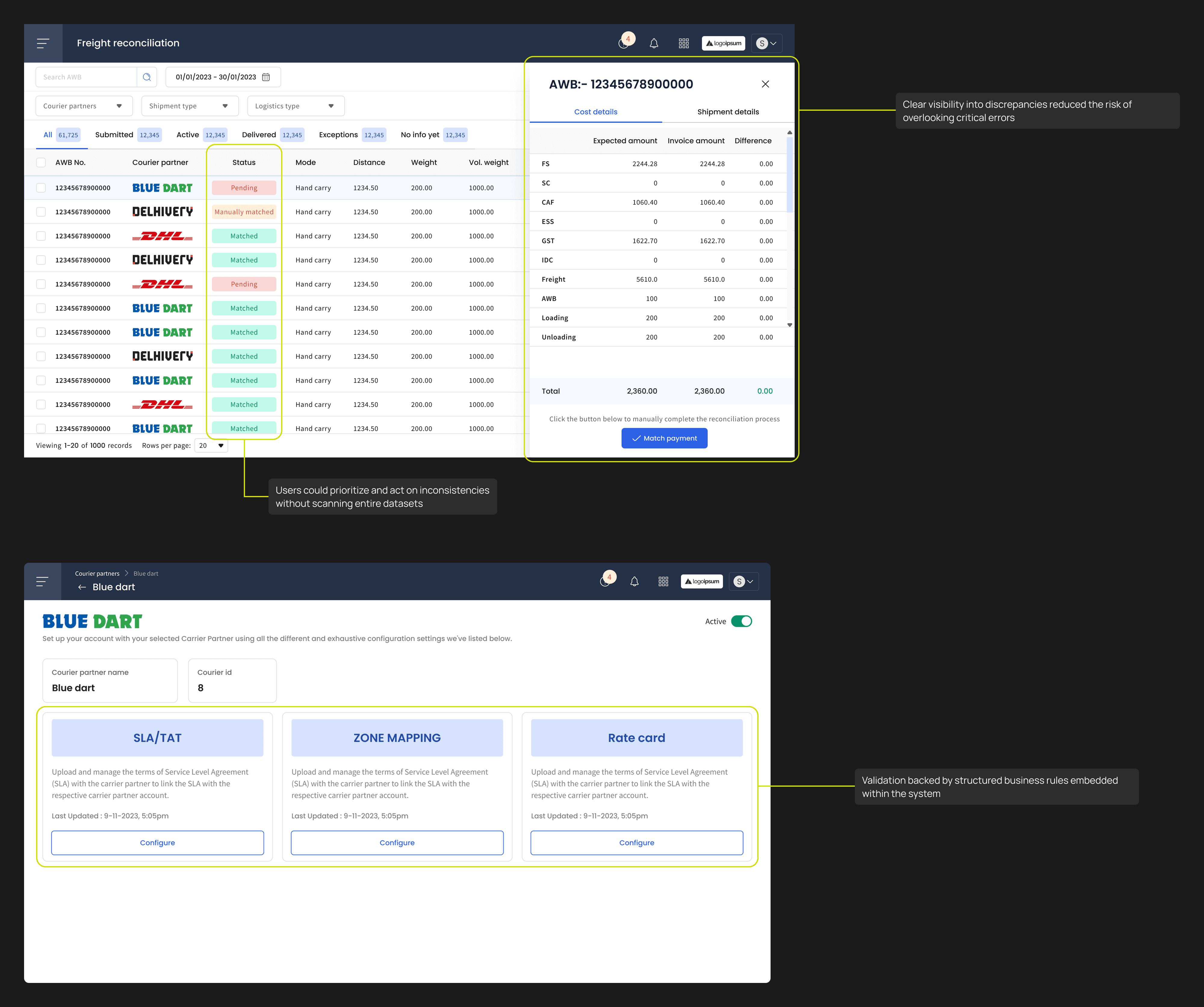
Users relied on manual processes and external tools to audit freight data, making reconciliation time-consuming and error-prone.
Instead of treating auditing as a separate workflow, I introduced a dedicated module that centralizes freight validation and highlights discrepancies.
Key changes:
Consolidated freight data into a single auditing view
Highlighted mismatches and anomalies
Enabled quicker validation and correction
Reduced manual reconciliation effort
Centralizing freight data eliminated the need to compile information across multiple sources
Faster identification of discrepancies
Mismatches in freight data became immediately visible instead of requiring manual comparison
Reduced dependence on other tools
Users no longer needed to rely heavily on spreadsheets or parallel systems for auditing
Impact & outcomes
Faster, action-oriented operations
Users could identify and resolve high-priority shipments with fewer steps, reducing delays caused by navigation and data scanning.
Reduced workflow friction across daily tasks
Consolidated workflows and improved information architecture minimized context switching and streamlined repetitive operational actions.
Increased trust through system transparency and validation
Audit trails and rule-based validation (SLA/TAT, rate cards, zone mapping) enabled users to act with greater confidence without external verification.
Improved accuracy in freight auditing and decision-making
Discrepancies were surfaced earlier and more clearly, reducing reliance on manual checks and lowering the risk of operational errors.
Next steps
Validate impact with usage data
Introduce analytics to measure task completion time, error rates, and feature adoption to quantify the effectiveness of the redesign and identify further optimization opportunities.
Evolve toward proactive operations
Explore opportunities to move from reactive workflows to proactive insights, such as surfacing predicted delays or anomalies before they impact operations.
Strengthen system feedback and automation
Expand rule-based validation (SLA, rate cards, zone mapping) to support more automated decision-making and reduce manual intervention in auditing workflows.
Test at scale across different user segments
Validate how the redesigned workflows perform across different enterprise clients, courier integrations, and varying operational complexities.